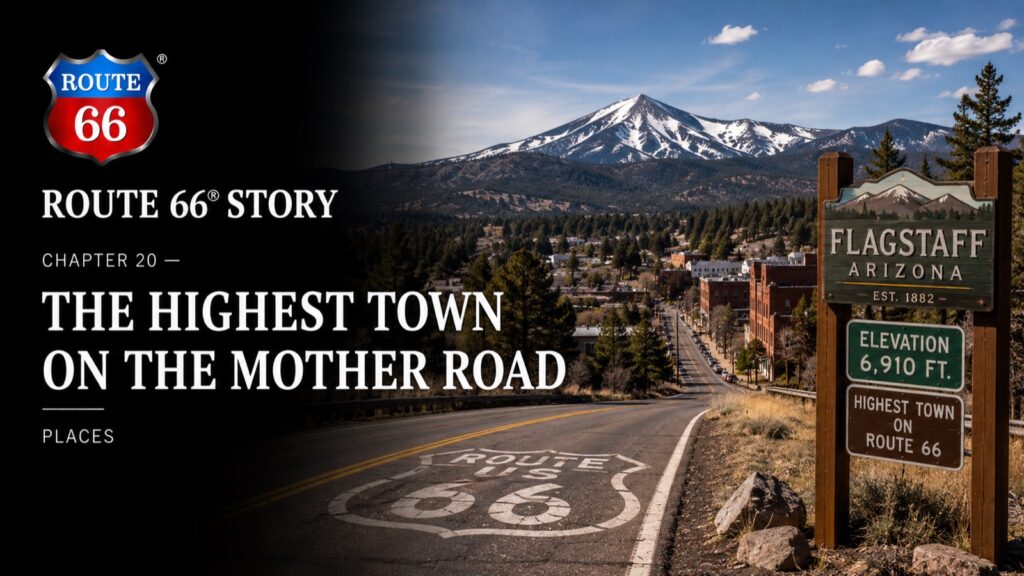
At nearly 7,000 feet, Flagstaff is the highest point any traveler reaches on Route 66 — a mountain town of ponderosa pines and thin, clear air that feels a world away from the deserts on either side of it. It began, fittingly, with a flag. On the Fourth of July, 1876, a party of travelers […]
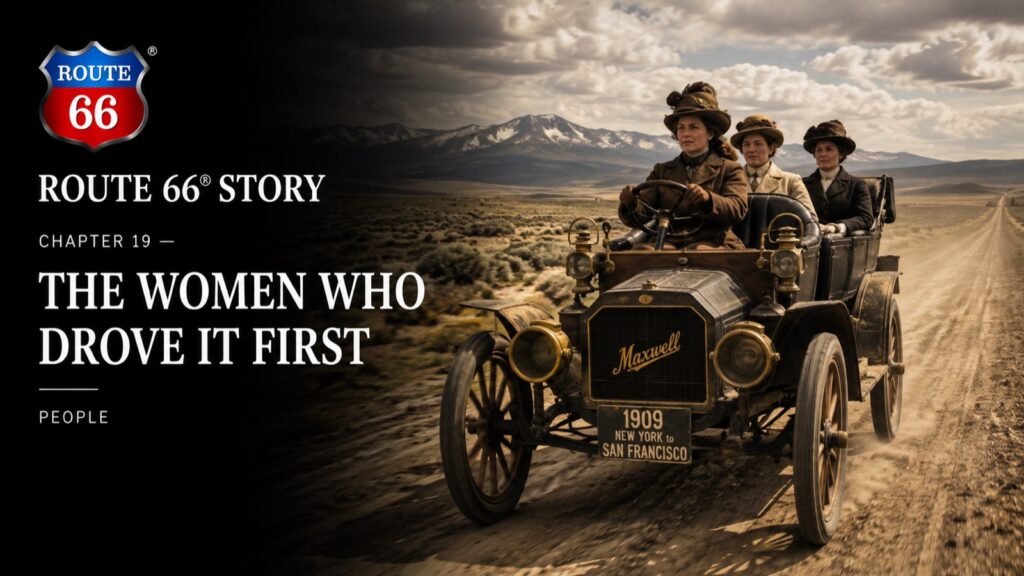
The open road has always been sold as a man’s freedom. The record says otherwise. In 1909 — eleven years before women could vote, and seventeen before Route 66 existed — a twenty-two-year-old New Jersey housewife named Alice Ramsey drove a Maxwell from New York to San Francisco. She was not alone: with her rode […]
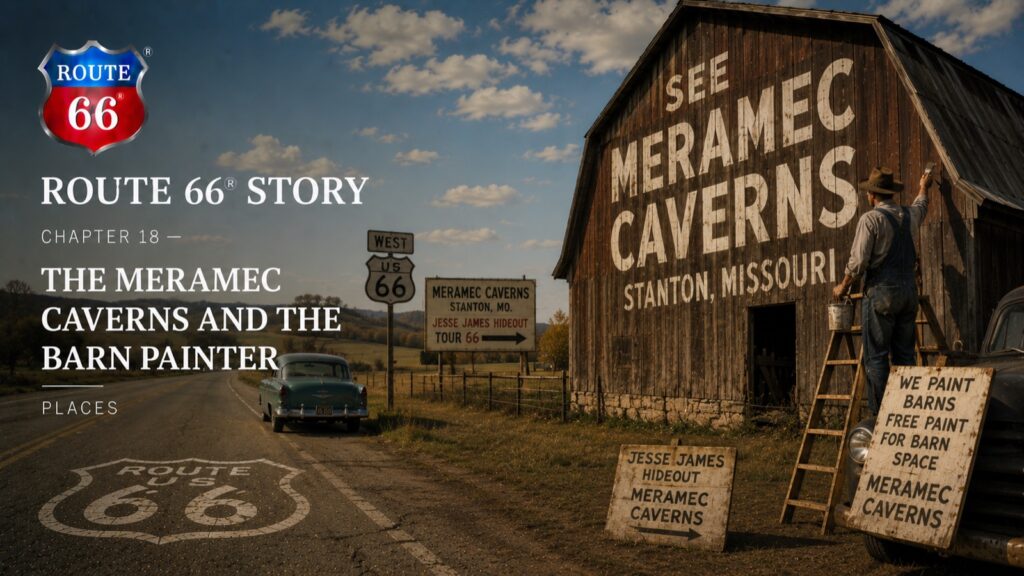
Anyone who has driven Route 66 through Missouri has been advertised at by Lester Dill, whether they know it or not. He may be the greatest roadside huckster the highway ever produced. In 1933, Dill bought a saltpeter cave near Stanton, Missouri, renamed it Meramec Caverns after the nearby river, and opened it to the […]
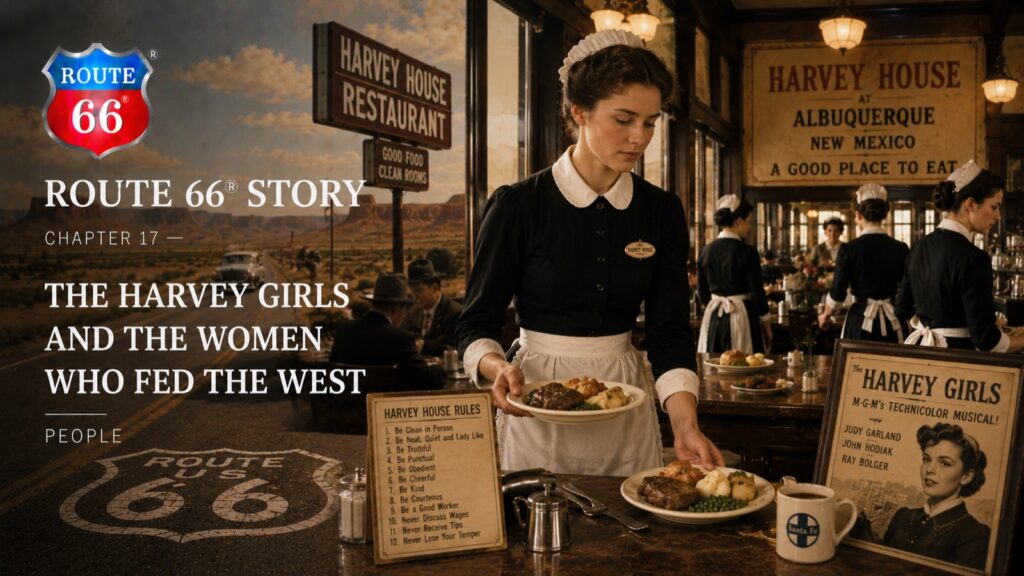
Before Route 66 carried motorists west, the railroad carried them — and waiting at the end of each hungry stretch of track was a Harvey Girl. Fred Harvey, an English immigrant who had suffered enough bad depot food as a traveling freight agent, built an empire out of doing it better. Starting in the 1870s, […]
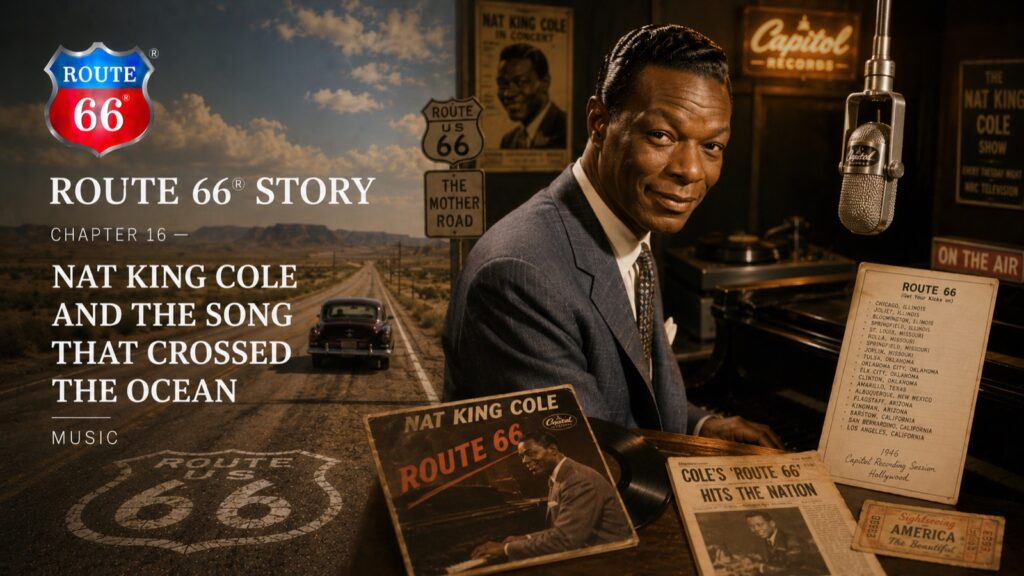
When Nat King Cole recorded Route 66 in early 1946, nobody quite knew what to make of it. Cole was a jazz pianist who sang, and while he’d had some success, he hadn’t yet broken through to the mainstream white audience that eventually made him one of the biggest stars in American music. The song […]
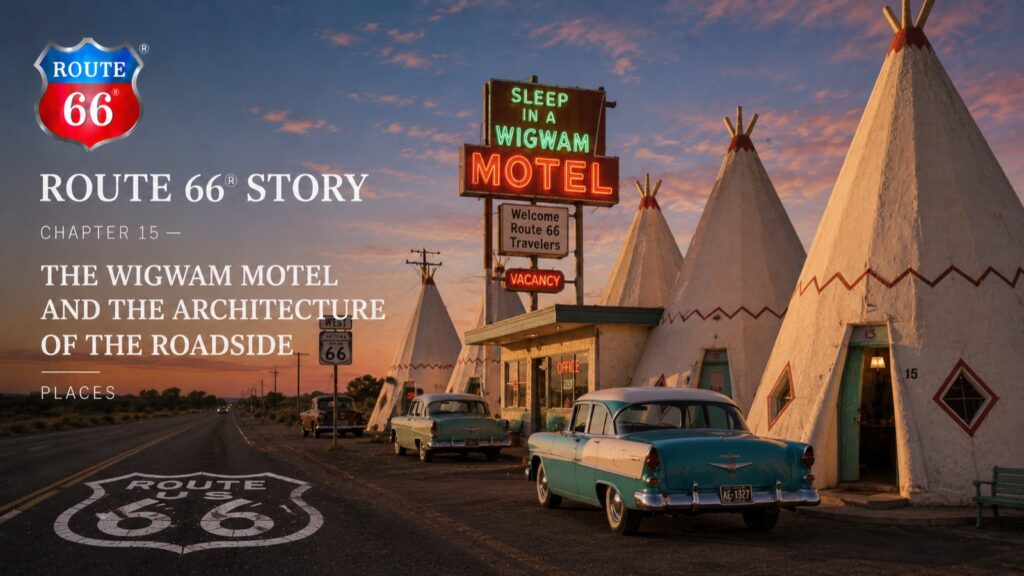
There are three Wigwam Motels left in the United States — one in Holbrook, Arizona, one in Cave City, Kentucky, and one in Rialto, California. All three are on or near Route 66. All three consist of concrete structures shaped like teepees (mislabeled as wigwams, which are a different kind of structure entirely), arranged in […]
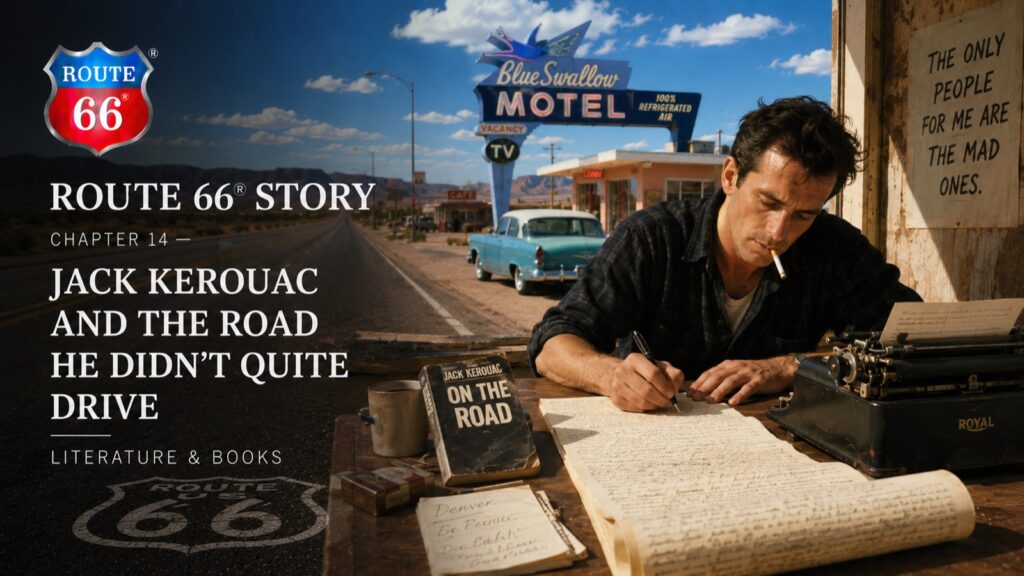
Ask people to name the book that captured the American highway, and many will say On the Road. Point out that it isn’t really about Route 66, and you’ll get an argument. Both things are true. Jack Kerouac wrote it in a furious burst in April 1951, feeding a continuous roll of paper into his […]
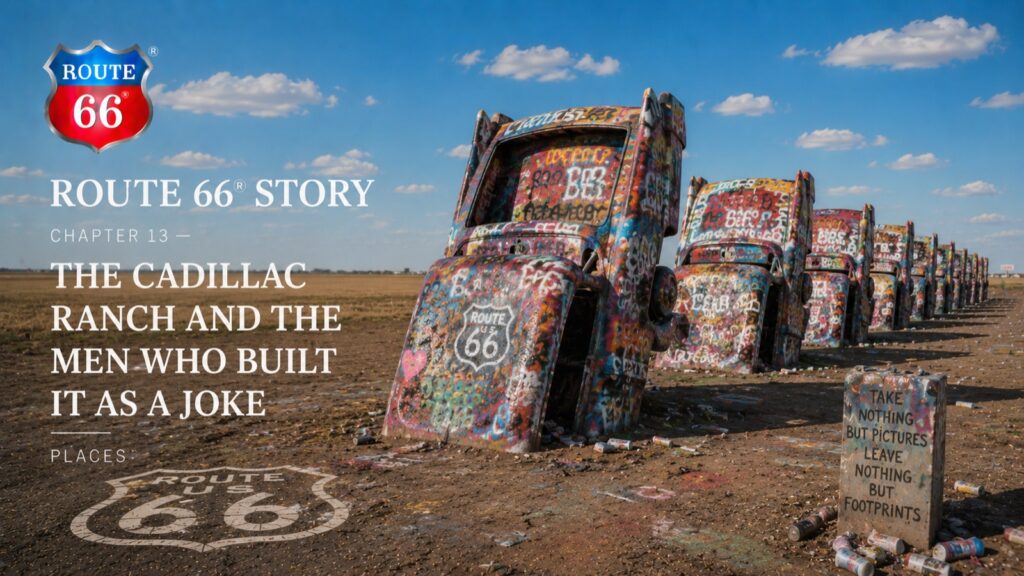
West of Amarillo, ten Cadillacs stand buried nose-first in a field, tail fins tipped toward the sky, every inch of them buried under decades of spray paint. It is probably the most famous piece of public art on Route 66, and it began as a joke with money behind it. In 1974, a San Francisco […]
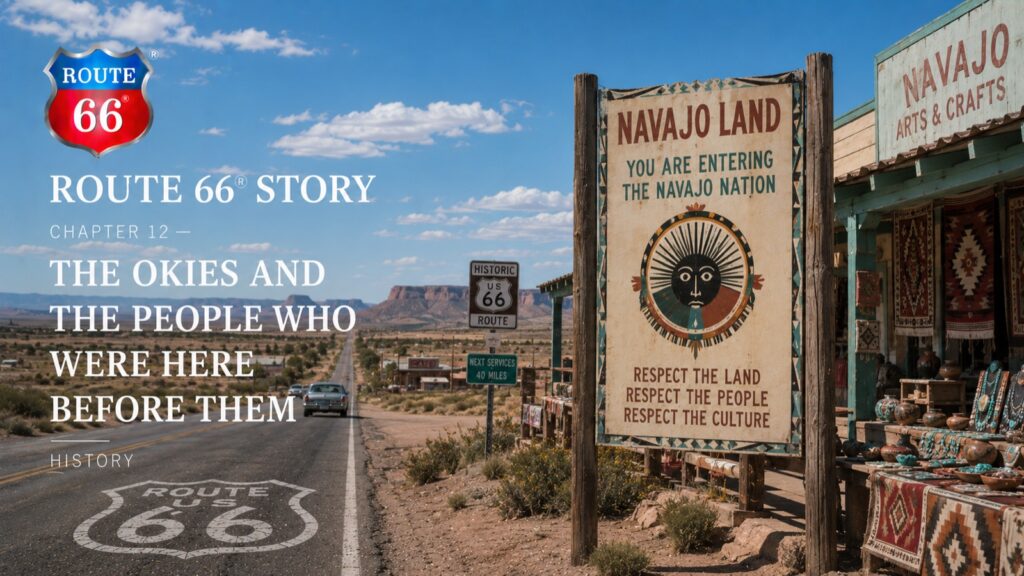
Route 66 mythology centers heavily on the Dust Bowl migration of the 1930s — the Okies and Arkies heading west, the Steinbeck families loading their jalopies and heading for California. That story is real and important. But it tends to erase another story that runs underneath it. For centuries before Cyrus Avery drew his line […]
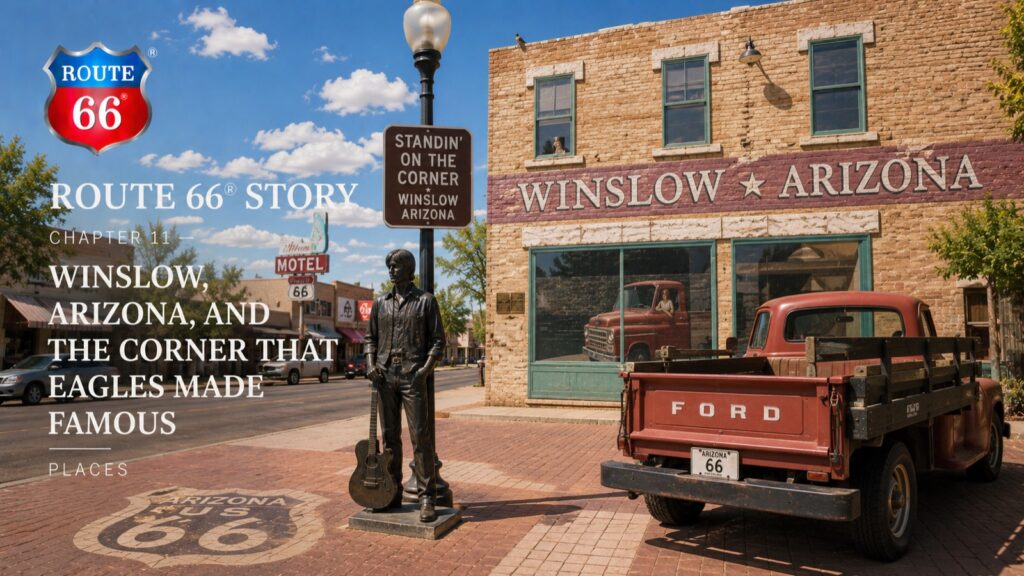
For a long time, Winslow, Arizona, was just another small town on the edge of the high desert, surviving on Route 66 traffic and not much else. The population peaked somewhere around 8,000 in the mid-twentieth century and then declined steadily as the interstate took traffic away and the economy of the Colorado Plateau shifted. […]