Chapter 38 — The Last Drive-In and the Movies That Came With the Car
For a few glorious decades, the American summer night had a particular shape: a big screen glowing against the dark, rows of cars nosed up to it, and a tinny speaker hooked over the window.
The drive-in movie theater was born in 1933, when a New Jersey man named Richard Hollingshead opened the first one in Camden, having reportedly worked out the sight-lines by parking cars in his own driveway. The idea was perfect for a car-crazy country, and after the war it exploded. By the late 1950s there were more than four thousand drive-ins across the United States, and Route 66 — a road defined by the automobile — was a natural home for them.
They were never really about the movies. They were about the car as a private room on wheels: families in pajamas with the kids asleep in the back seat, teenagers with very little interest in the second feature, whole communities gathered in a field under the stars for the price of a carload. The films were often B-grade. The point was the ritual.
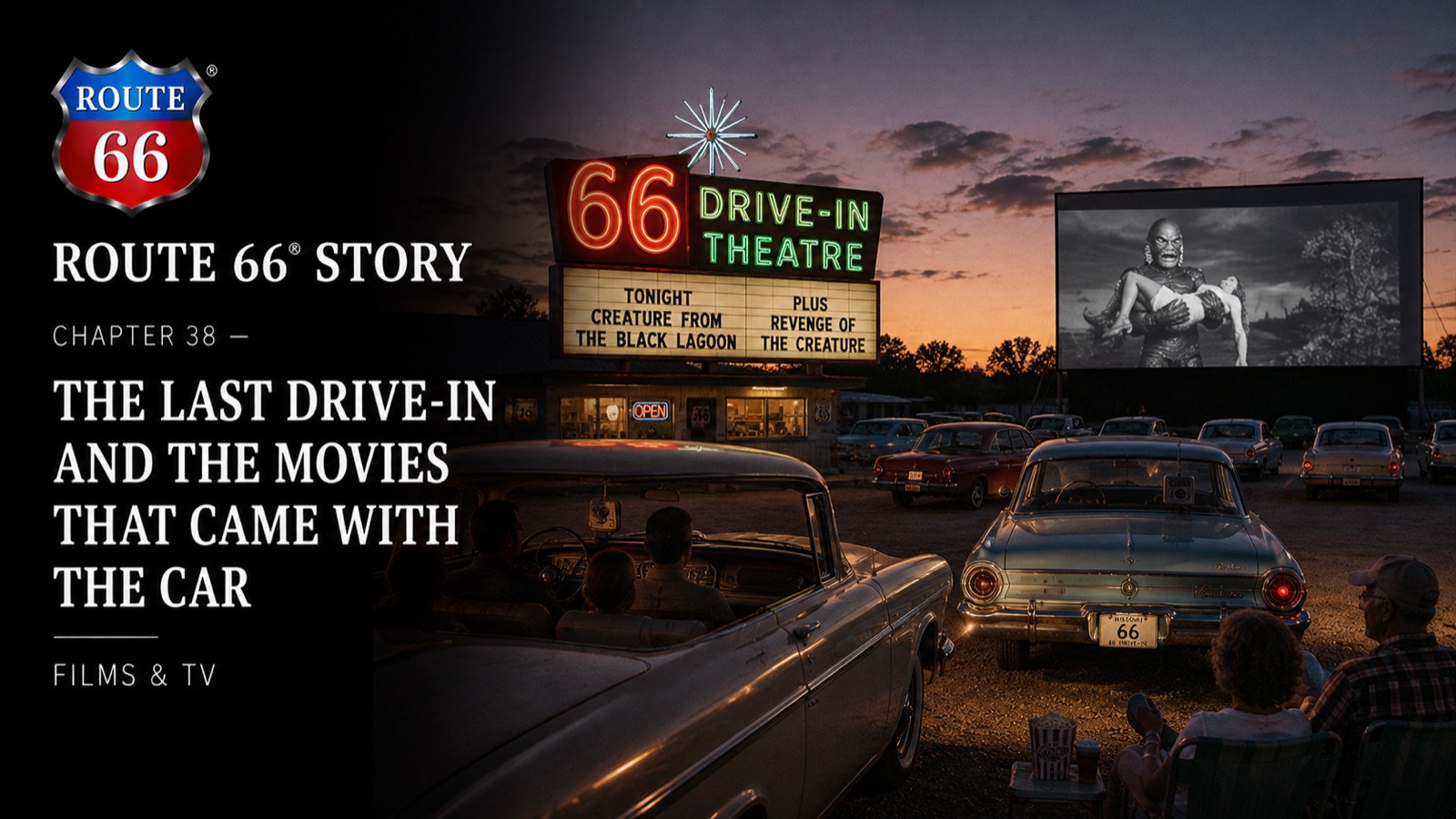
Most are gone now, the great screens rotted or demolished, the lots turned into shopping centers. But a handful survive, including the 66 Drive-In in Carthage, Missouri, still lighting up its screen on summer nights, right where it always has.
The road gave America the car. The car gave America a new way to go to the movies.
We are offering licences for ROUTE 66® Beer in specific territories. An invitation to others to become part of this story. To carry a piece of the road with them and to contribute to the story. We will share a percentage of royalties with Route 66 associations to keep the story alive.
BY ENTERING THIS WEBSITE YOU MUST BE AND CONFIRM THAT YOU ARE OF LEGAL DRINKING AGE IN THE COUNTRY THAT YOU ARE IN AND LEGALLY PERMITTED TO VIEW THESE PAGES.
This info is all part of our commitment to responsible drinking.