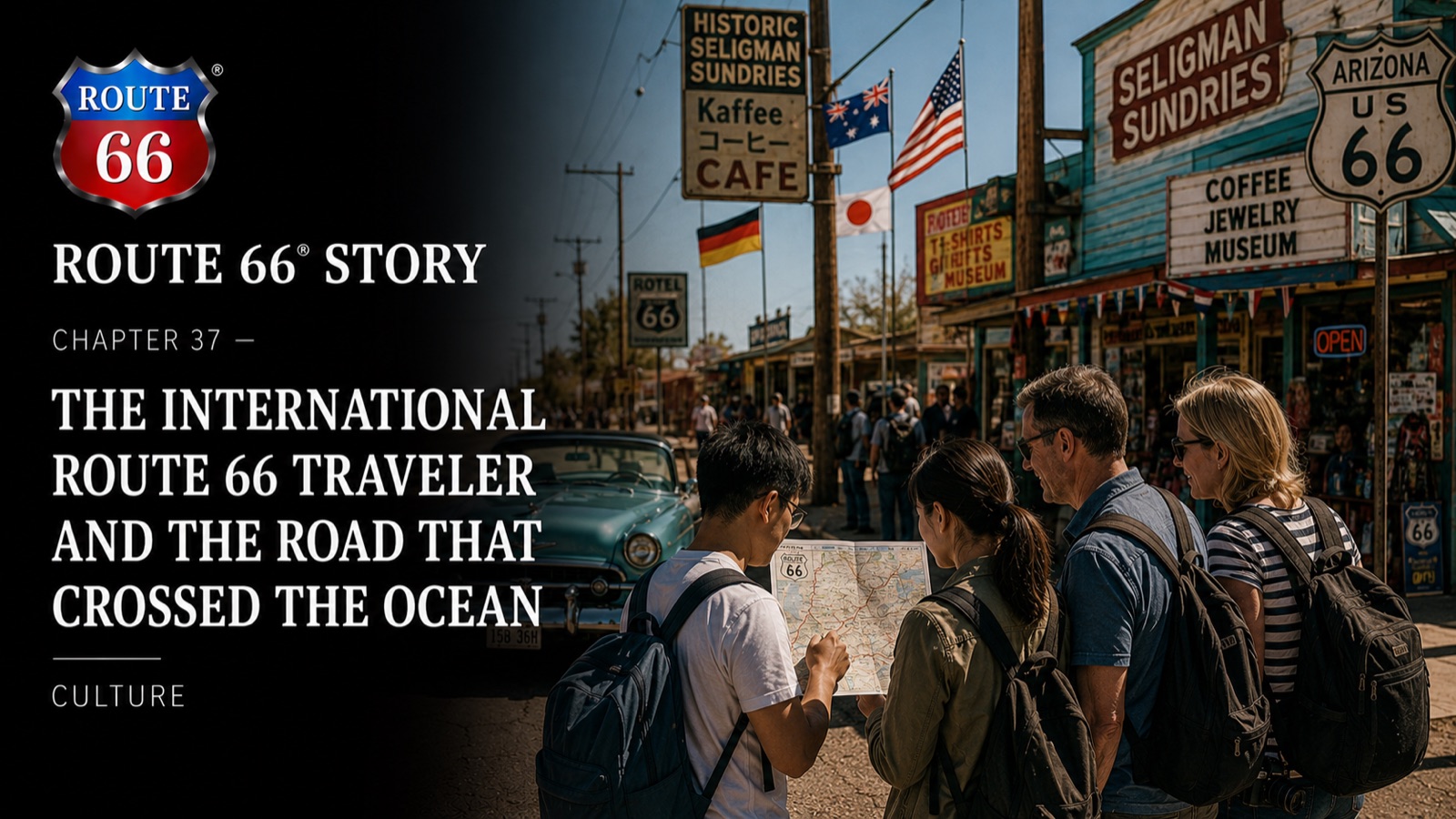
Here is a fact that surprises most Americans: the most famous highway in the United States is, these days, largely a foreign pilgrimage. By one University of Illinois estimate, more than seventy percent of the people traveling Route 66 come from overseas — from Britain, Germany, Australia, and beyond. Some shops along the road report foreign visitors outnumbering Americans five to one.
You can see it in the parking lots: knots of German bikers on rented Harleys, French families in rented Mustangs, Japanese tour groups photographing a rusted gas pump with real reverence. The ghost town of Amboy, California — population essentially zero — still draws crowds of overseas visitors, precisely because its faded emptiness looks like the “lost America” they came to find.
The devotion runs deep enough that they have built the road at home. There is a Route 66 association in Germany and another in the Netherlands; a European Route 66 Festival, first held in a Bavarian village in 2016, has drawn thousands of fans from across the continent to celebrate an American road most of them have to cross an ocean to drive.
Ask them why, and the answer is usually the same: freedom. To someone from a small, bordered country, the idea of pointing a car at Chicago and not stopping until the Pacific — 2,400 miles, eight states, no papers required — is intoxicating. They understood the romance of Route 66, in some ways, better than the country that built it.
America made the road. The world fell in love with it.
We are offering licences for ROUTE 66® Beer in specific territories. An invitation to others to become part of this story. To carry a piece of the road with them and to contribute to the story. We will share a percentage of royalties with Route 66 associations to keep the story alive.
The journey continues. This story is brought to you by ROUTE 66® BEER. Find us at ROUTE66BEER.COM

BY ENTERING THIS WEBSITE YOU MUST BE AND CONFIRM THAT YOU ARE OF LEGAL DRINKING AGE IN THE COUNTRY THAT YOU ARE IN AND LEGALLY PERMITTED TO VIEW THESE PAGES.
This info is all part of our commitment to responsible drinking.