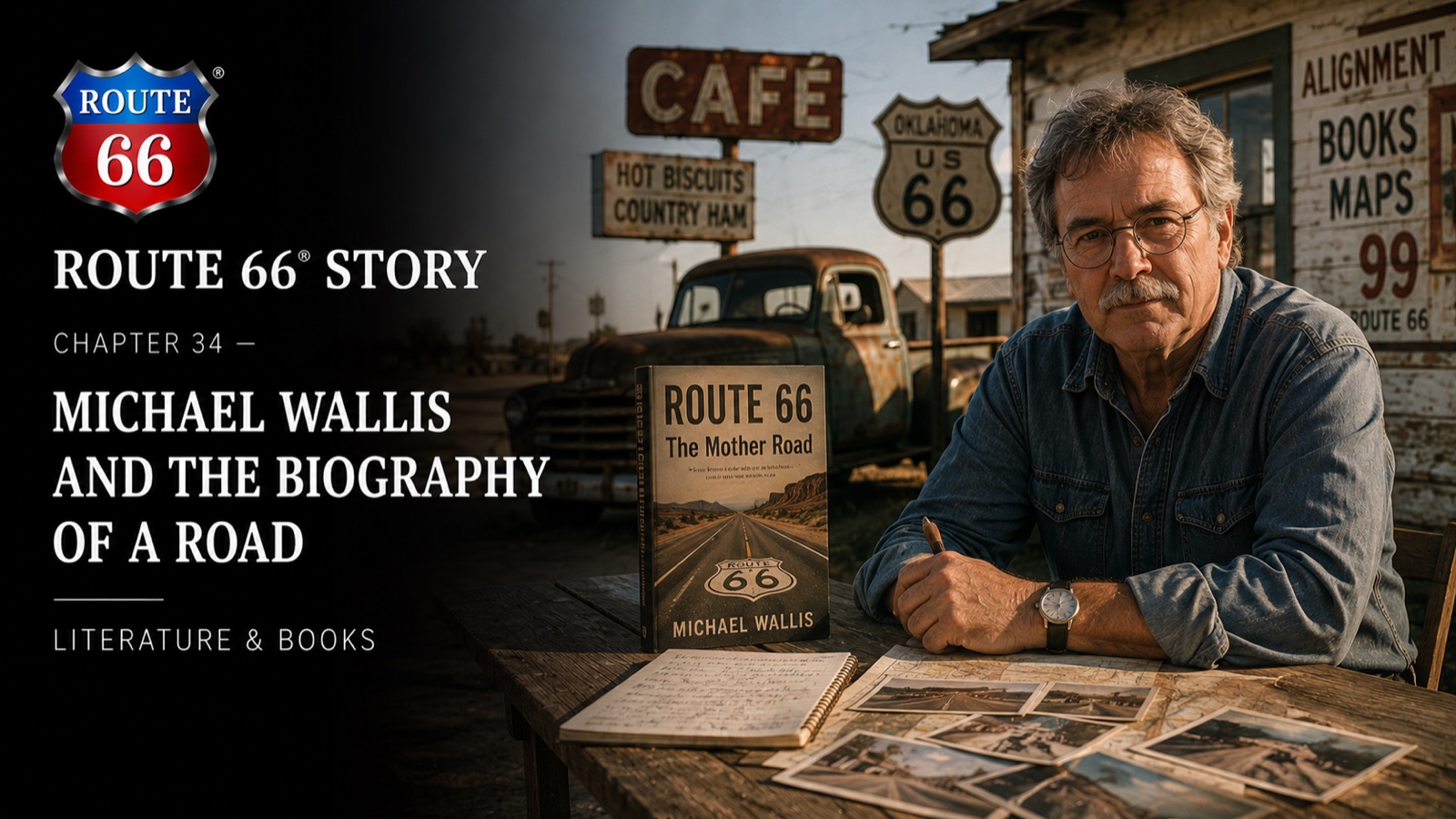
Chapter 34 — Michael Wallis and the Biography of a Road
By the 1980s, Route 66 was dying quietly. Decommissioned, bypassed, falling off the maps — and then a journalist from Tulsa gave it back its story.
In 1990, Michael Wallis published Route 66: The Mother Road, a book he called a love letter to the highway. He had spent years driving it and talking to the people who had built their lives along it — the motel keepers, the café owners, the sign painters — and he set their stories down before they vanished. The book is widely credited with sparking the revival of interest that turned a decommissioned highway into a global pilgrimage.
Wallis became the road’s foremost champion and its most recognizable voice — quite literally. When a team of filmmakers set out to make an animated movie about a forgotten Route 66 town, they turned to him as their guide, driving the length of the road with Wallis narrating its history. He ended up lending his voice to a character in the finished film, and the fictional town at its heart was stitched together from the real Route 66 places he had spent his life documenting.
It is a neat piece of symmetry: the man who wrote the road back into the national imagination also became one of the voices keeping it there.
Some people travel a road. A few give it back its voice.
We are offering licences for ROUTE 66® Beer in specific territories. An invitation to others to become part of this story. To carry a piece of the road with them and to contribute to the story. We will share a percentage of royalties with Route 66 associations to keep the story alive.
BY ENTERING THIS WEBSITE YOU MUST BE AND CONFIRM THAT YOU ARE OF LEGAL DRINKING AGE IN THE COUNTRY THAT YOU ARE IN AND LEGALLY PERMITTED TO VIEW THESE PAGES.
This info is all part of our commitment to responsible drinking.