Chapter 33 — The Last Gas for 100 Miles and the Signs That Were Always True
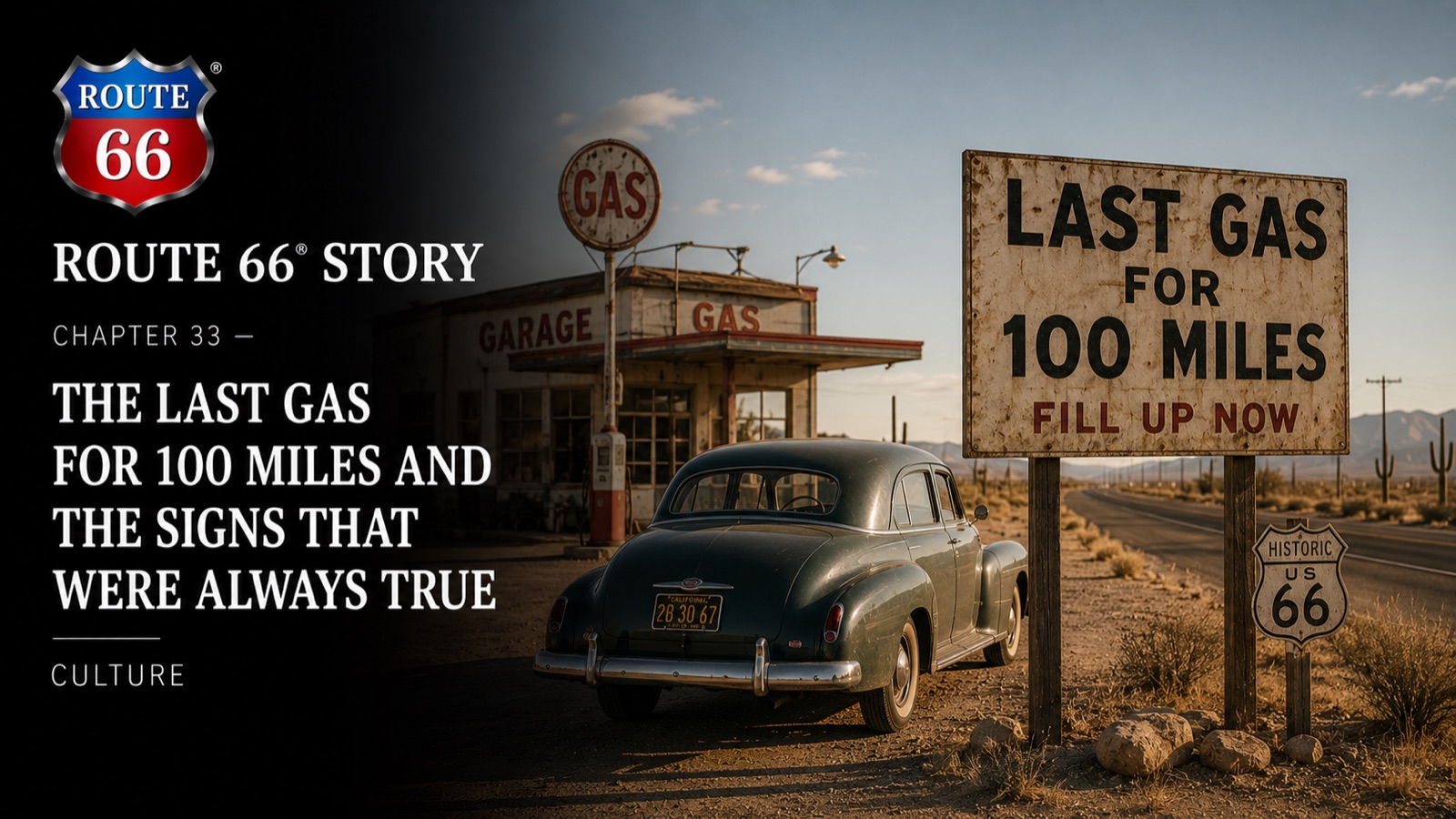
Four words on a hand-painted board could put a knot in any driver’s stomach: LAST GAS FOR 100 MILES.
On the long desert stretches of Route 66 — the Mojave, the empty runs across Arizona and New Mexico — those signs were not marketing. They were a genuine warning, and a genuine mercy. A driver could go a very long way without another pump, and in a 1940s car with a boiling radiator and no air conditioning, misjudging it could turn a road trip into a survival situation.
The signs created their own little economy of dread and relief. The last station before the void could charge what it liked, and did; the desperate traveler paid, topped off the tank, filled a canvas water bag to hang on the bumper, and pushed out into the heat shimmer with a prayer. The next station, a hundred miles on, greeted you like a port after a storm.
It was one of the honest things about the old road. It never pretended the country was tamed. The desert was still the desert, indifferent to your schedule, and the highway ran a thin lifeline across it, marked by signs that told you the plain truth about how alone you were about to be.
The interstate smoothed all that away — exits every few miles, a station guaranteed. Something was gained. Something, too, was lost.
We are offering licences for ROUTE 66® Beer in specific territories. An invitation to others to become part of this story. To carry a piece of the road with them and to contribute to the story. We will share a percentage of royalties with Route 66 associations to keep the story alive.
BY ENTERING THIS WEBSITE YOU MUST BE AND CONFIRM THAT YOU ARE OF LEGAL DRINKING AGE IN THE COUNTRY THAT YOU ARE IN AND LEGALLY PERMITTED TO VIEW THESE PAGES.
This info is all part of our commitment to responsible drinking.