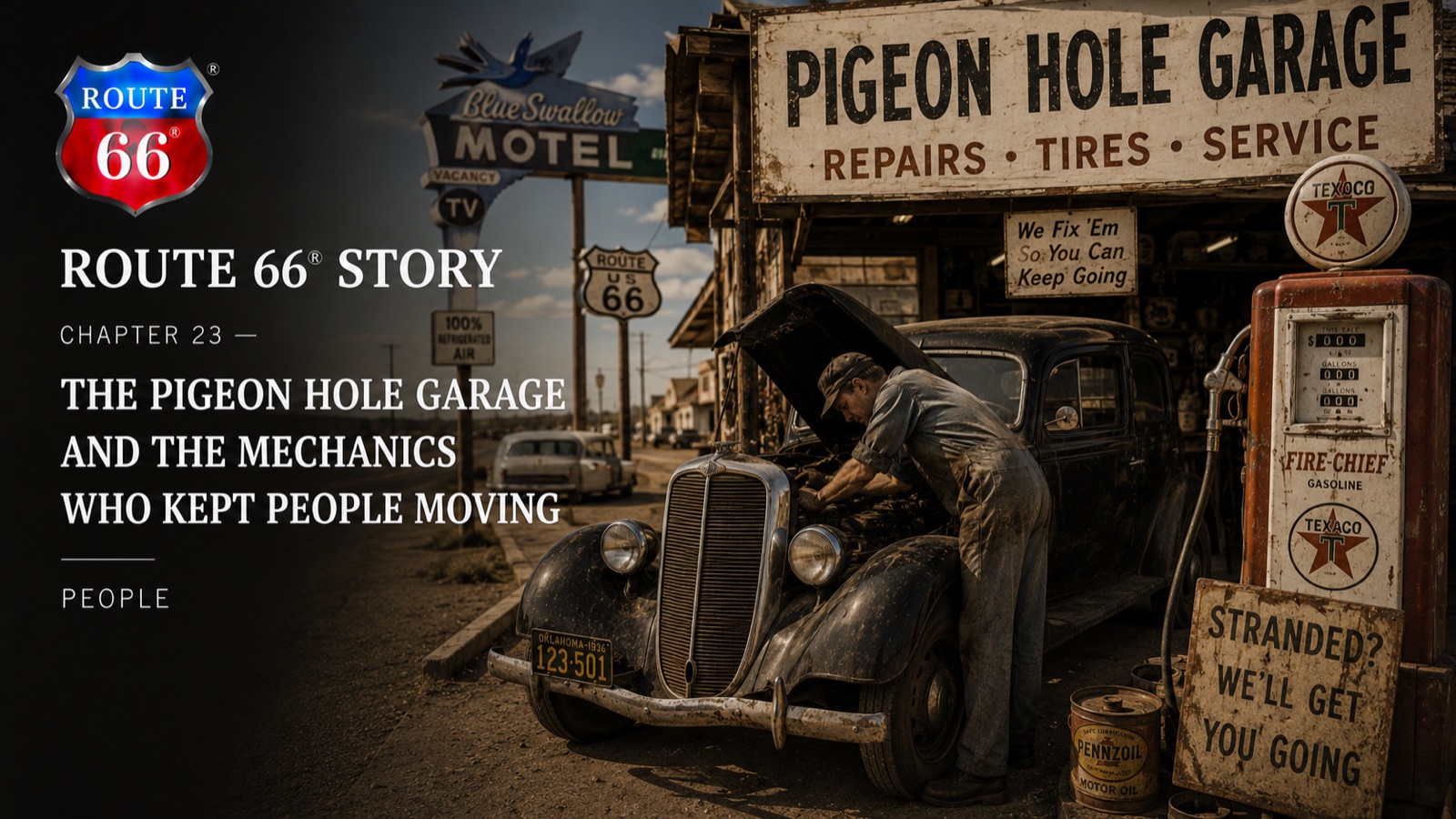
Every roadside attraction, every neon motel sign, every story about a famous traveler passing through a small town — all of it depended on a mostly invisible infrastructure of mechanics and service station attendants who kept the cars running.
In the 1920s and 1930s, long-distance driving was genuinely dangerous in ways that go beyond the obvious. Roads turned to gravel or dirt without warning. River crossings washed out. Cars of the era broke down at rates that would be unthinkable today — fan belts snapped, radiators overheated, tires blew every fifty miles on rough surfaces.
The mechanics who worked Route 66 service stations were skilled tradespeople performing emergency surgery on machines they often hadn’t seen before, with parts that might need to be fabricated from whatever was on hand. A good mechanic in a small town on Route 66 could mean the difference between a family continuing their journey or being stranded in the desert for three days.
Many of them were also, in the absence of any formal system, a kind of information network. They knew which stretches of road had washed out. Which motels were safe. Which towns had gas shortages. They passed information to travelers the way internet reviews function now — verbally, imperfect, but usually accurate about the things that mattered.
The road is remembered for its characters — the artists, the musicians, the Dust Bowl families. It ran on the mechanics, the waitresses, the gas station attendants, and the motel night clerks who never made it into anybody’s mythology.
That’s usually how it goes. The road runs on the people nobody writes songs about.
We are offering licences for ROUTE 66® Beer in specific territories. An invitation to others to become part of this story. To carry a piece of the road with them and to contribute to the story. We will share a percentage of royalties with Route 66 associations to keep the story alive.
The journey continues. This story is brought to you by ROUTE 66® BEER. Find us at ROUTE66BEER.COM

BY ENTERING THIS WEBSITE YOU MUST BE AND CONFIRM THAT YOU ARE OF LEGAL DRINKING AGE IN THE COUNTRY THAT YOU ARE IN AND LEGALLY PERMITTED TO VIEW THESE PAGES.
This info is all part of our commitment to responsible drinking.