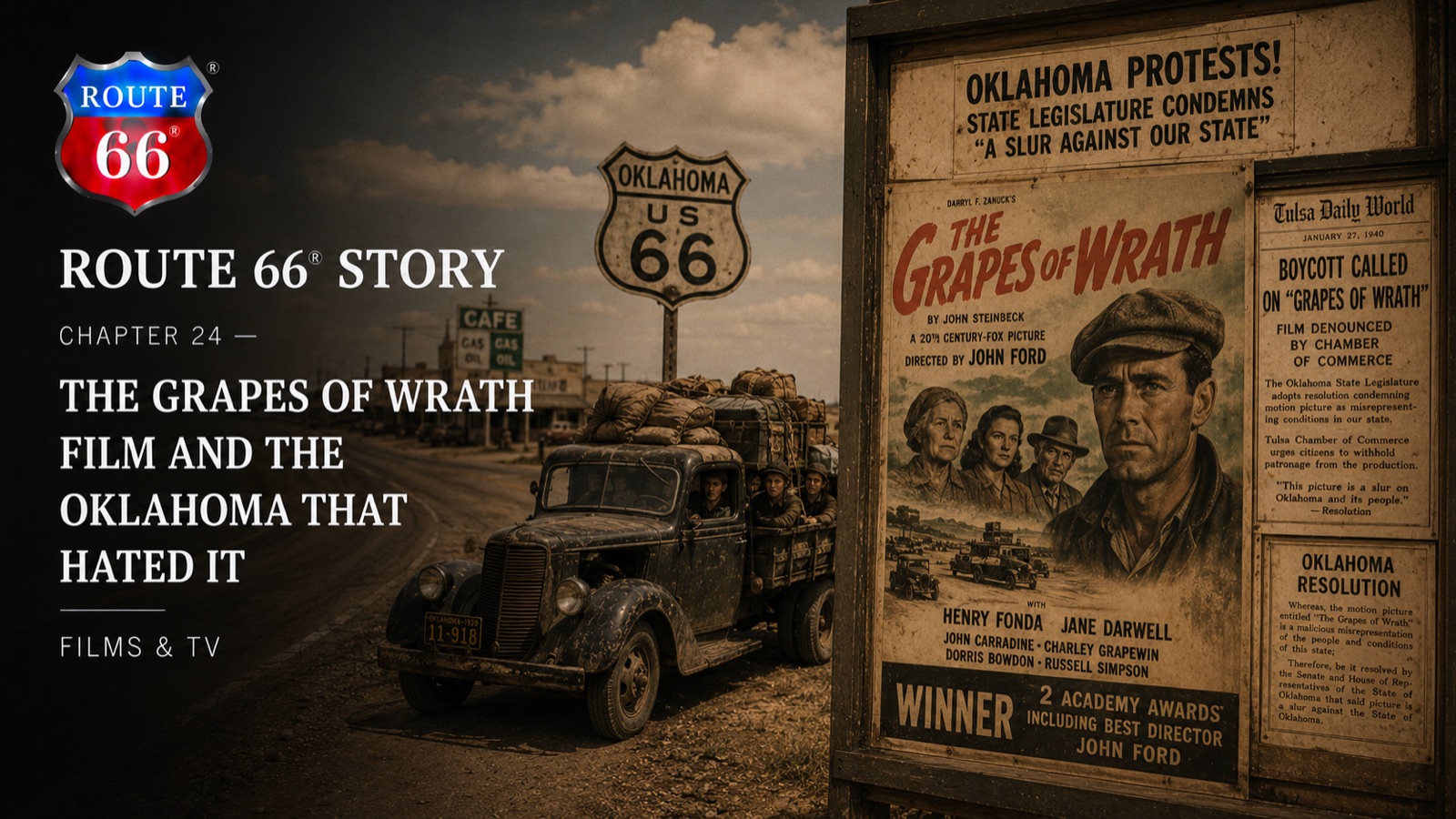
Chapter 24 — The Grapes of Wrath Film and the Oklahoma That Hated It
A year after John Steinbeck’s novel scandalized the country, Hollywood did something almost no one expected: it filmed the thing honestly.
The Grapes of Wrath reached screens in 1940, directed by John Ford for 20th Century-Fox, with Henry Fonda as Tom Joad — the ex-convict who comes home to find his family evicted and joins their desperate migration west. Ford shot it plainly, in stark black and white, followed the Joads’ overloaded jalopy along the same road the real migrants took, and refused to soften the poverty into something comfortable. Jane Darwell played Ma Joad, the family’s unbreakable center.
The result was both a triumph and a provocation. It won Ford the Academy Award for Best Director and Darwell the Oscar for Best Supporting Actress; Fonda was nominated too, and though he lost that night, the role shadowed his whole career — he would not be nominated for acting again until he finally won, more than forty years later, for On Golden Pond. Meanwhile the story’s unsparing portrait of the migrants’ treatment drew furious denunciation, most memorably from an Oklahoma congressman who rose in the House to call the book a lie.
Whatever the politics, the film fixed one image in the national memory forever: a battered truck, piled with everything a family owned, grinding west down Route 66 toward a promise that might not be kept.
The road has carried a lot of dreams. This film remembered the ones it broke.
We are offering licences for ROUTE 66® Beer in specific territories. An invitation to others to become part of this story. To carry a piece of the road with them and to contribute to the story. We will share a percentage of royalties with Route 66 associations to keep the story alive.
BY ENTERING THIS WEBSITE YOU MUST BE AND CONFIRM THAT YOU ARE OF LEGAL DRINKING AGE IN THE COUNTRY THAT YOU ARE IN AND LEGALLY PERMITTED TO VIEW THESE PAGES.
This info is all part of our commitment to responsible drinking.