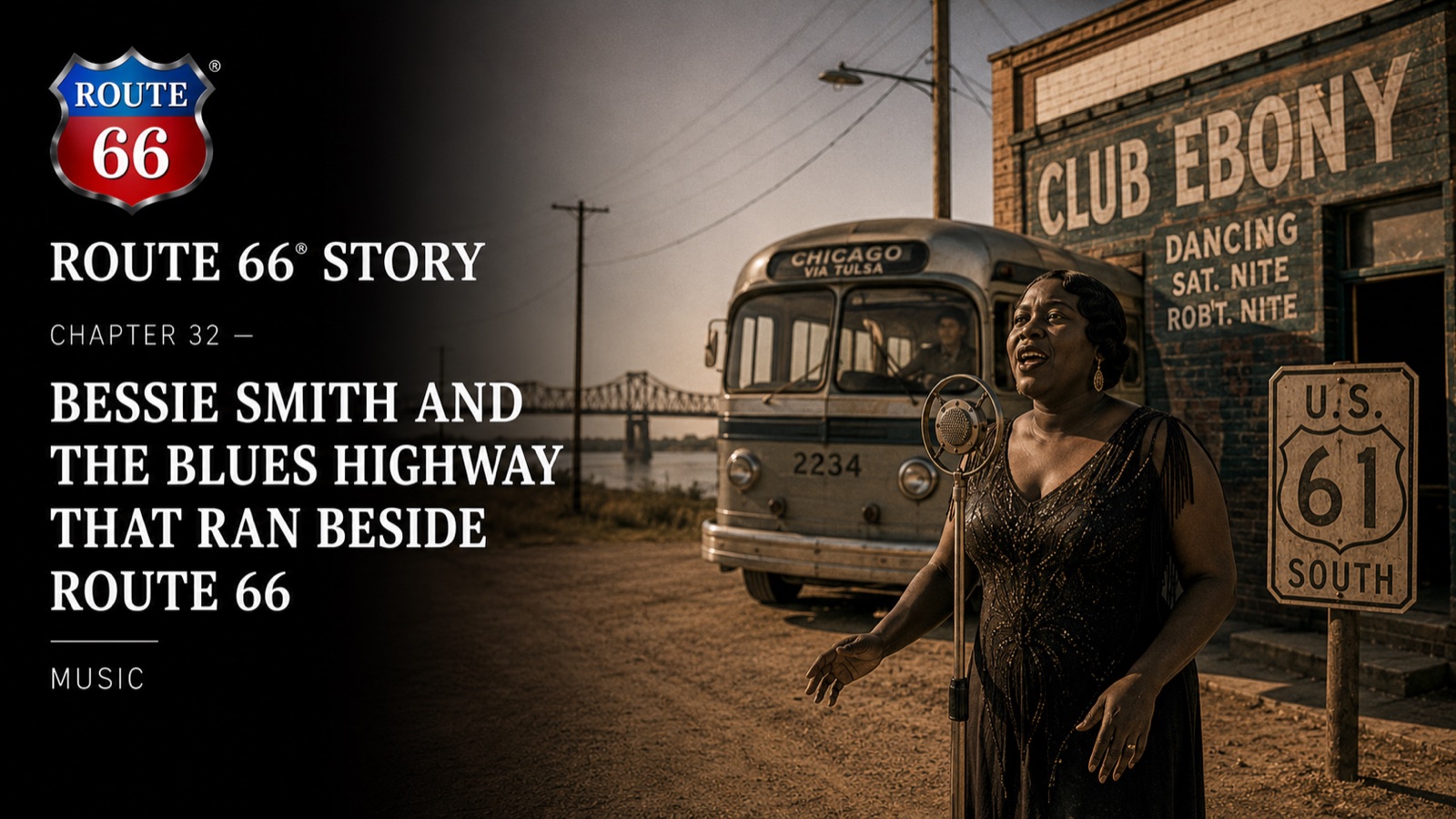
Chapter 32 — Bessie Smith and the Blues Highway That Ran Beside Route 66
In 1937, the greatest blues singer America had yet produced died on a dark highway in Mississippi — and the story of how she died says almost everything about what the open road meant to a Black traveler.
Bessie Smith, the “Empress of the Blues,” was riding through the Delta on Highway 61 — the blues corridor, not Route 66 — when her car crashed in the early hours of September 26. For decades a terrible legend clung to her death: that she bled to death because a whites-only hospital turned her away. Later research complicated the story — she was taken to a Black hospital and died of catastrophic injuries — but the legend endured precisely because everyone knew it could have been true.
That was the shadow side of the American love affair with the highway. For Black families, the freedom of the road came wrapped in danger. On Route 66 itself, more than half the towns along the route were “sundown towns,” where a Black traveler caught after dark risked violence. A wrong stop for gas or a restroom could turn deadly.
So Black travelers armed themselves with information. From 1936 to 1966, The Negro Motorist Green Book listed the garages, cafés and motels along roads like 66 where they would be safe — a guide to getting your kicks, and getting home alive.
The Mother Road promised freedom to everyone. It delivered it to some more freely than others.
We are offering licences for ROUTE 66® Beer in specific territories. An invitation to others to become part of this story. To carry a piece of the road with them and to contribute to the story. We will share a percentage of royalties with Route 66 associations to keep the story alive.
BY ENTERING THIS WEBSITE YOU MUST BE AND CONFIRM THAT YOU ARE OF LEGAL DRINKING AGE IN THE COUNTRY THAT YOU ARE IN AND LEGALLY PERMITTED TO VIEW THESE PAGES.
This info is all part of our commitment to responsible drinking.