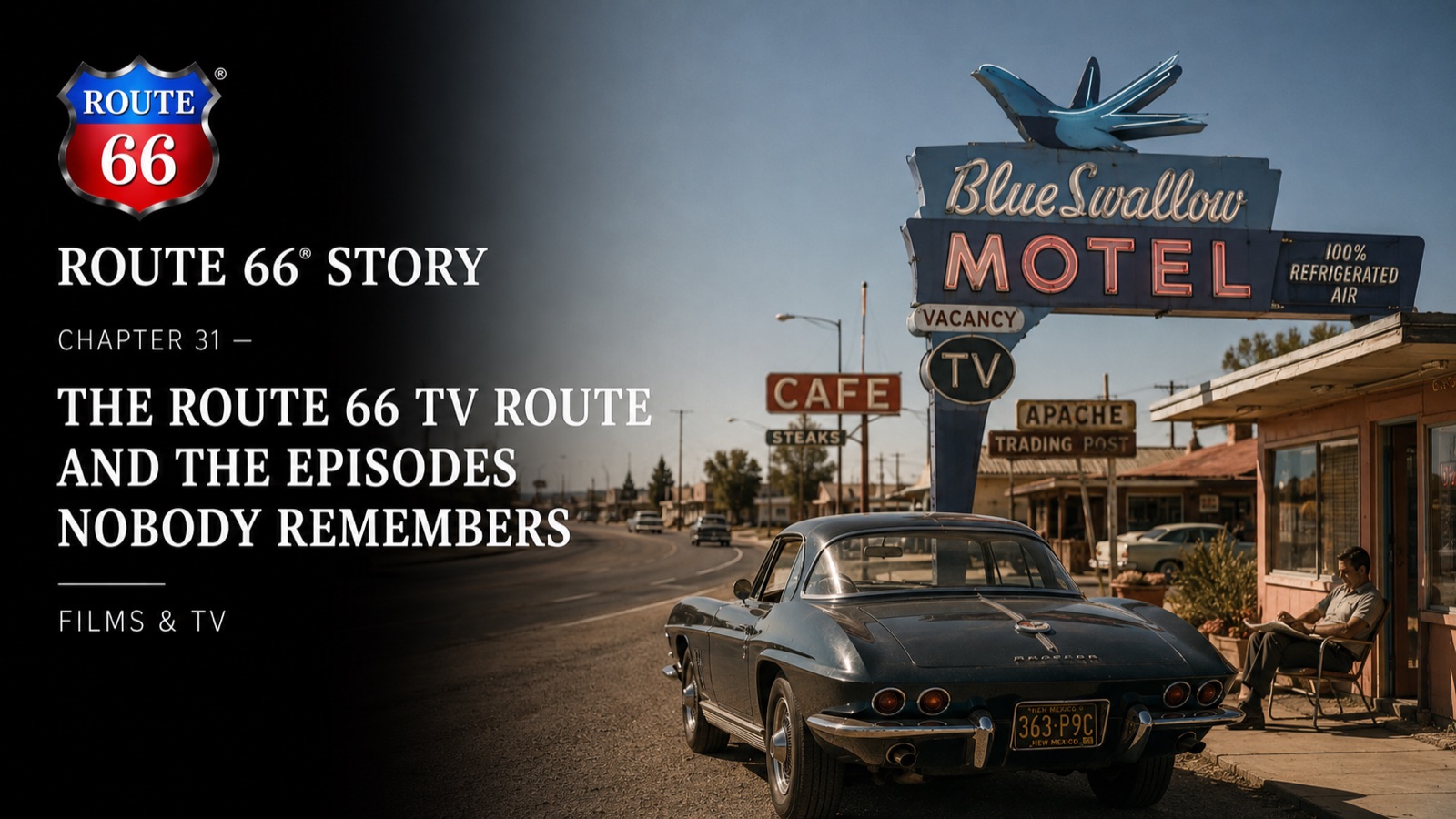
Chapter 31 — The Route 66 TV Route and the Episodes Nobody Remembers
When the producers of the Route 66 television series insisted on filming every episode on location, they thought they were making a drama. What they were actually making was one of the great accidental documentaries of mid-century America.
Between 1960 and 1964, chasing stories across some twenty-five states, the show’s cameras rolled through real towns at a real moment in time — and captured, in the background of every scene, a country that was about to disappear. The independent motels with their hand-lettered signs. The main streets before the malls. The factories, rail yards, diners and filling stations, all still working, all still local, filmed just as the new interstate highways were beginning to route the traffic and the money somewhere else.
Nobody set out to preserve any of it. The crew was there for the melodrama of the week. But because they refused to fake the backdrops on a studio lot, they left behind an unmatched moving record of the roadside America that Route 66 embodied — the two-lane, pre-franchise country that within twenty years would be half boarded up.
Watch those old episodes now and the plots barely register. What holds you is everything around the edges: the ghosts of a thousand small enterprises, alive and lit and open for business, going about an ordinary day they didn’t know was ending.
Sometimes the truest record of a place is the one nobody meant to keep.
We are offering licences for ROUTE 66® Beer in specific territories. An invitation to others to become part of this story. To carry a piece of the road with them and to contribute to the story. We will share a percentage of royalties with Route 66 associations to keep the story alive.
BY ENTERING THIS WEBSITE YOU MUST BE AND CONFIRM THAT YOU ARE OF LEGAL DRINKING AGE IN THE COUNTRY THAT YOU ARE IN AND LEGALLY PERMITTED TO VIEW THESE PAGES.
This info is all part of our commitment to responsible drinking.