Chapter 30 — The Giant Orange and the Roadside Stand That Fed the Drive
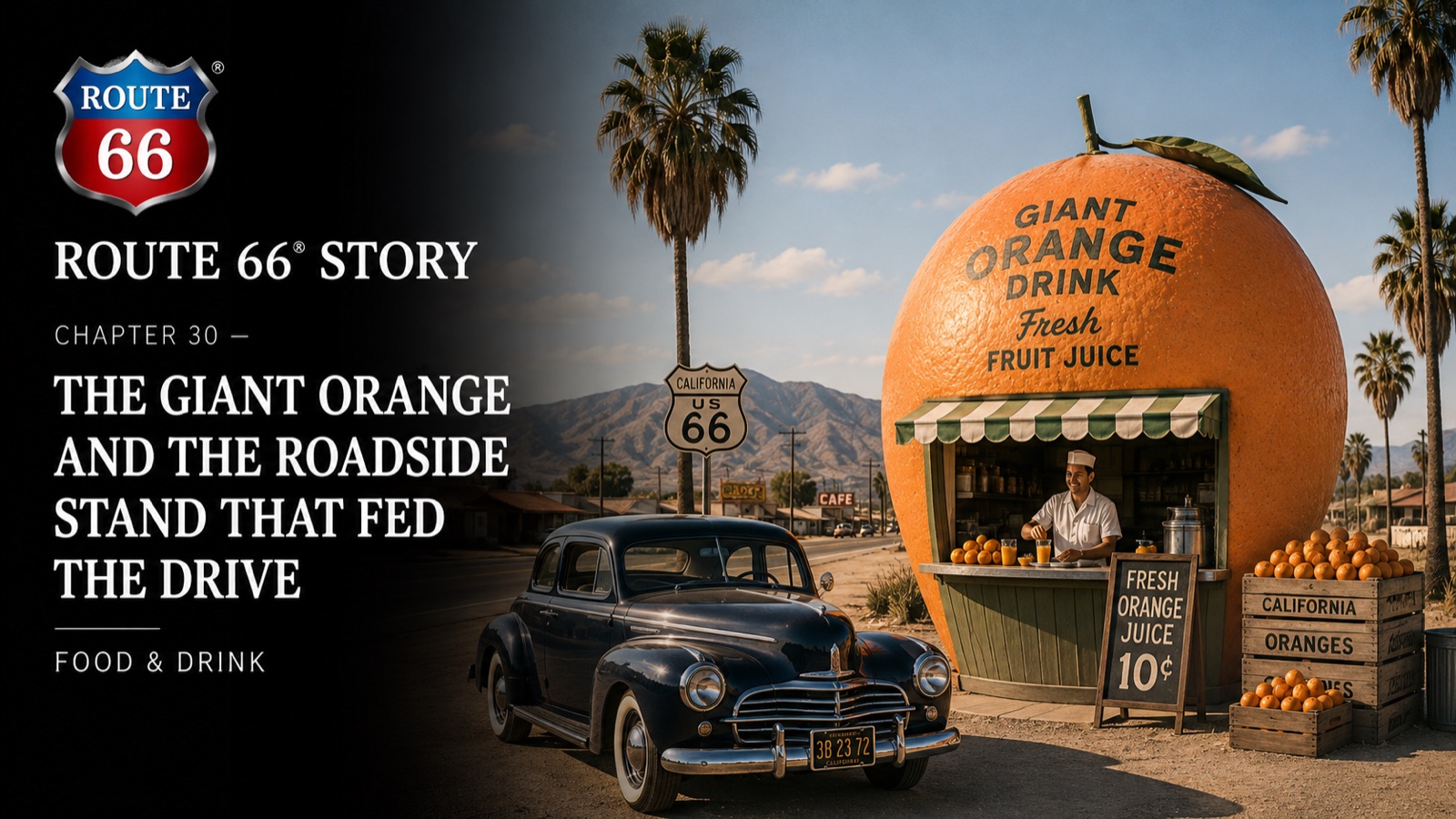
Somewhere on the old road, a driver in 1935 might pull over for a cold drink at a stand shaped like a colossal orange — a domed, bright-painted sphere with a window cut in the side and a man inside squeezing juice.
This was programmatic architecture, and Route 66 was full of it. In an age before towering signs and franchise logos, the cleverest way to catch a passing motorist was to build your business in the shape of what it sold. Starting in 1920s California, giant orange-shaped juice stands sprouted along the highways, selling fresh-squeezed orange juice to sun-struck travelers who couldn’t not notice a building that looked like breakfast.
The orange was just the beginning. Up and down the Mother Road and its cousins, you could eat in a diner shaped like a coffee pot, sleep in a wigwam, buy tamales from a giant tamale, and gas up beside a whale. The buildings were jokes and landmarks at once — impossible to miss, impossible to forget, and precisely the point.
Most are gone now, victims of the interstate and the standardized franchise, whose whole genius was to look identical everywhere. A handful survive as beloved oddities, reminders of a time when a roadside business had to earn your attention with a little audacity.
The modern road wants you to know exactly what you’ll get. The old one preferred to surprise you.
We are offering licences for ROUTE 66® Beer in specific territories. An invitation to others to become part of this story. To carry a piece of the road with them and to contribute to the story. We will share a percentage of royalties with Route 66 associations to keep the story alive.
BY ENTERING THIS WEBSITE YOU MUST BE AND CONFIRM THAT YOU ARE OF LEGAL DRINKING AGE IN THE COUNTRY THAT YOU ARE IN AND LEGALLY PERMITTED TO VIEW THESE PAGES.
This info is all part of our commitment to responsible drinking.