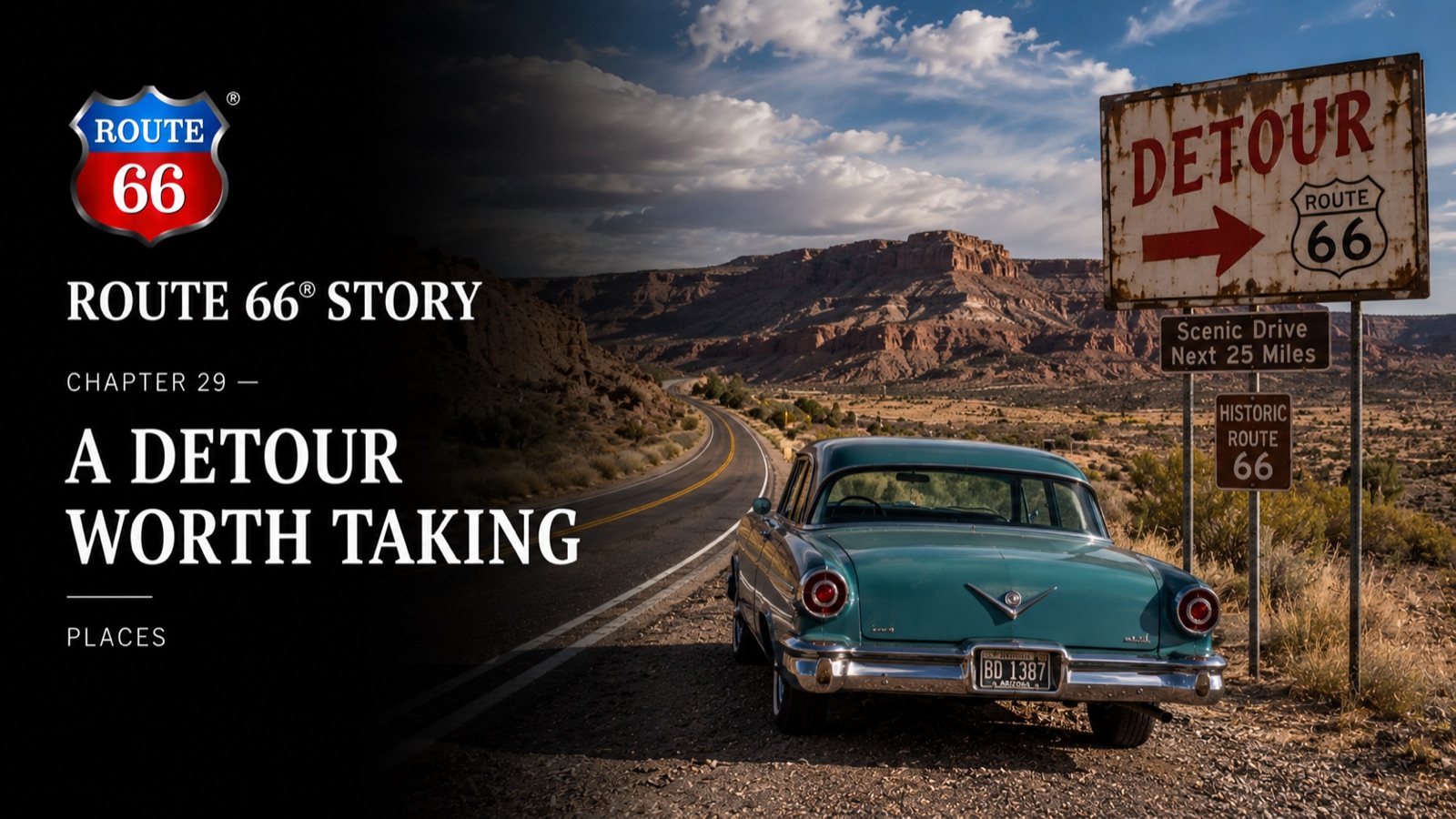
Not every treasure sits on the road. Some of the greatest are a long detour off it — and this one is worth the drive.
Far south of where Route 66 crosses the Texas panhandle, in Austin, the University of Texas keeps a building called the Harry Ransom Center, and inside it are two objects that stop visitors cold. One is a Gutenberg Bible — one of only five complete copies in the United States, printed around 1455, the book that launched the age of printing. The other is quieter and even rarer: a small, dim pewter plate that is the oldest surviving photograph ever made.
That plate is View from the Window at Le Gras, produced by the Frenchman Joseph Nicéphore Niépce in the 1820s after an exposure that lasted the better part of a day. What it shows — the rooftops outside his workroom window — is almost impossible to make out. What it is, is the beginning of every photograph ever taken since, including the millions snapped along Route 66.
There’s a fitting symmetry to it. The road is a monument to the American urge to go and see for yourself; the Ransom Center holds the first object that ever let people see a place they hadn’t been. The impulse is the same. Only the distance differs.
Some of what the road is really about, you’ll only find by leaving it.
We are offering licences for ROUTE 66® Beer in specific territories. An invitation to others to become part of this story. To carry a piece of the road with them and to contribute to the story. We will share a percentage of royalties with Route 66 associations to keep the story alive.
BY ENTERING THIS WEBSITE YOU MUST BE AND CONFIRM THAT YOU ARE OF LEGAL DRINKING AGE IN THE COUNTRY THAT YOU ARE IN AND LEGALLY PERMITTED TO VIEW THESE PAGES.
This info is all part of our commitment to responsible drinking.