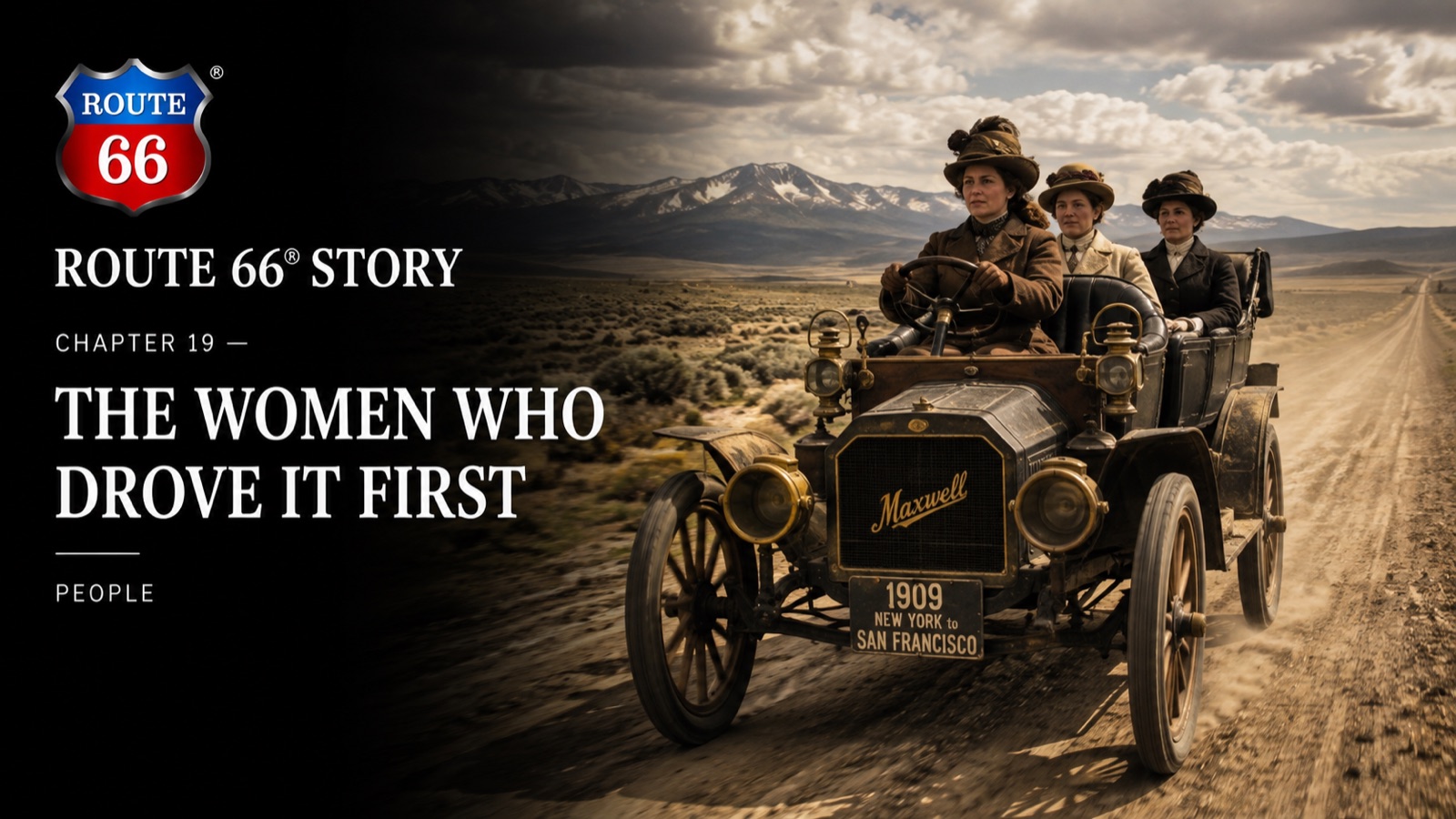
The open road has always been sold as a man’s freedom. The record says otherwise.
In 1909 — eleven years before women could vote, and seventeen before Route 66 existed — a twenty-two-year-old New Jersey housewife named Alice Ramsey drove a Maxwell from New York to San Francisco. She was not alone: with her rode three companions — her sisters-in-law Nettie Powell and Margaret Atwood, and a teenaged friend, Hermine Jahns — none of whom could drive. Ramsey did all of it herself, some 3,800 miles, most of them on roads that were barely roads, changing her own tires and cleaning her own spark plugs, becoming the first woman to drive across the United States.
She had company in spirit. In 1915, Effie Price Gladding drove the new Lincoln Highway with her husband and wrote a book about it; other women set records and filed dispatches from behind the wheel while the automobile was still widely considered too complicated, too dangerous, too unladylike for them to touch.
By the time Route 66 opened in 1926, women were already driving it — as migrants, as workers, as travelers going somewhere on their own terms. The road didn’t grant them freedom. They took it, and had been taking it for decades.
The highway never asked who was driving. It just opened up ahead of whoever dared.
We are offering licences for ROUTE 66® Beer in specific territories. An invitation to others to become part of this story. To carry a piece of the road with them and to contribute to the story. We will share a percentage of royalties with Route 66 associations to keep the story alive.
BY ENTERING THIS WEBSITE YOU MUST BE AND CONFIRM THAT YOU ARE OF LEGAL DRINKING AGE IN THE COUNTRY THAT YOU ARE IN AND LEGALLY PERMITTED TO VIEW THESE PAGES.
This info is all part of our commitment to responsible drinking.