Chapter 18 — The Meramec Caverns and the Barn Painter
Anyone who has driven Route 66 through Missouri has been advertised at by Lester Dill, whether they know it or not. He may be the greatest roadside huckster the highway ever produced.
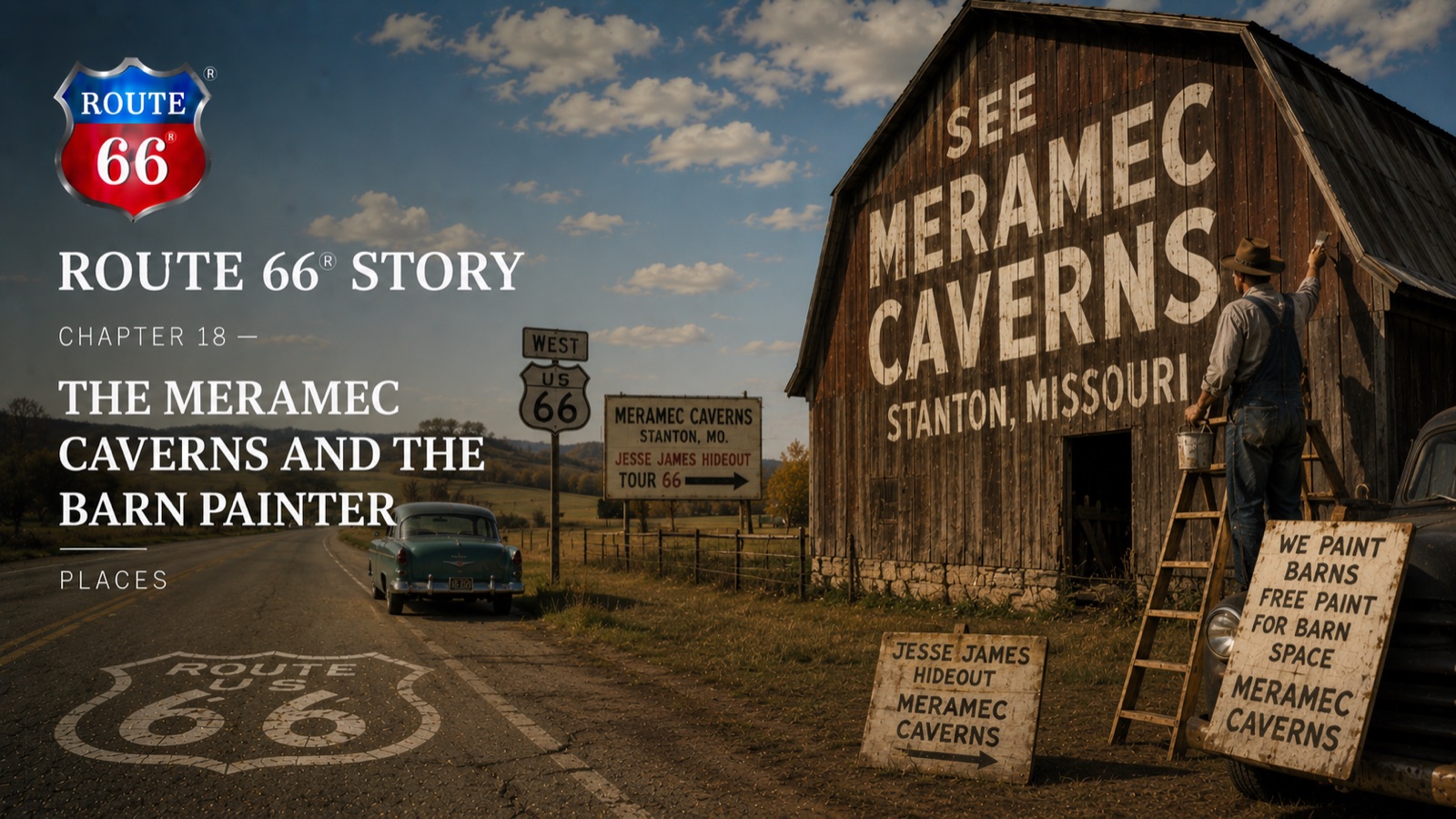
In 1933, Dill bought a saltpeter cave near Stanton, Missouri, renamed it Meramec Caverns after the nearby river, and opened it to the public in 1935 as a show cave of stalactites and vast underground rooms. The cave was a genuine natural wonder. But it was Dill’s marketing that made it a legend.
He painted barns. He would offer a farmer a free coat of paint for a weathered barn, on the one condition that his crew could letter the roof with three giant words — MERAMEC CAVERNS — aimed at the cars passing below. At its height the campaign covered barns in fourteen states. Then, around 1940, he did something no one had done before: he put adhesive on the back of a small sign and stuck it to a visitor’s car. The bumper sticker was born, and every departing tourist became a rolling billboard.
For good measure, Dill declared the cave a onetime hideout of Jesse James — a claim historians have never been able to support and Dill never much cared to prove. He would, he liked to say, do anything to promote Meramec Caverns.
The road was built for going somewhere. Lester Dill built a fortune on getting you to stop.
We are offering licences for ROUTE 66® Beer in specific territories. An invitation to others to become part of this story. To carry a piece of the road with them and to contribute to the story. We will share a percentage of royalties with Route 66 associations to keep the story alive.
BY ENTERING THIS WEBSITE YOU MUST BE AND CONFIRM THAT YOU ARE OF LEGAL DRINKING AGE IN THE COUNTRY THAT YOU ARE IN AND LEGALLY PERMITTED TO VIEW THESE PAGES.
This info is all part of our commitment to responsible drinking.