Route 66 mythology centers heavily on the Dust Bowl migration of the 1930s — the Okies and Arkies heading west, the Steinbeck families loading their jalopies and heading for California. That story is real and important. But it tends to erase another story that runs underneath it.
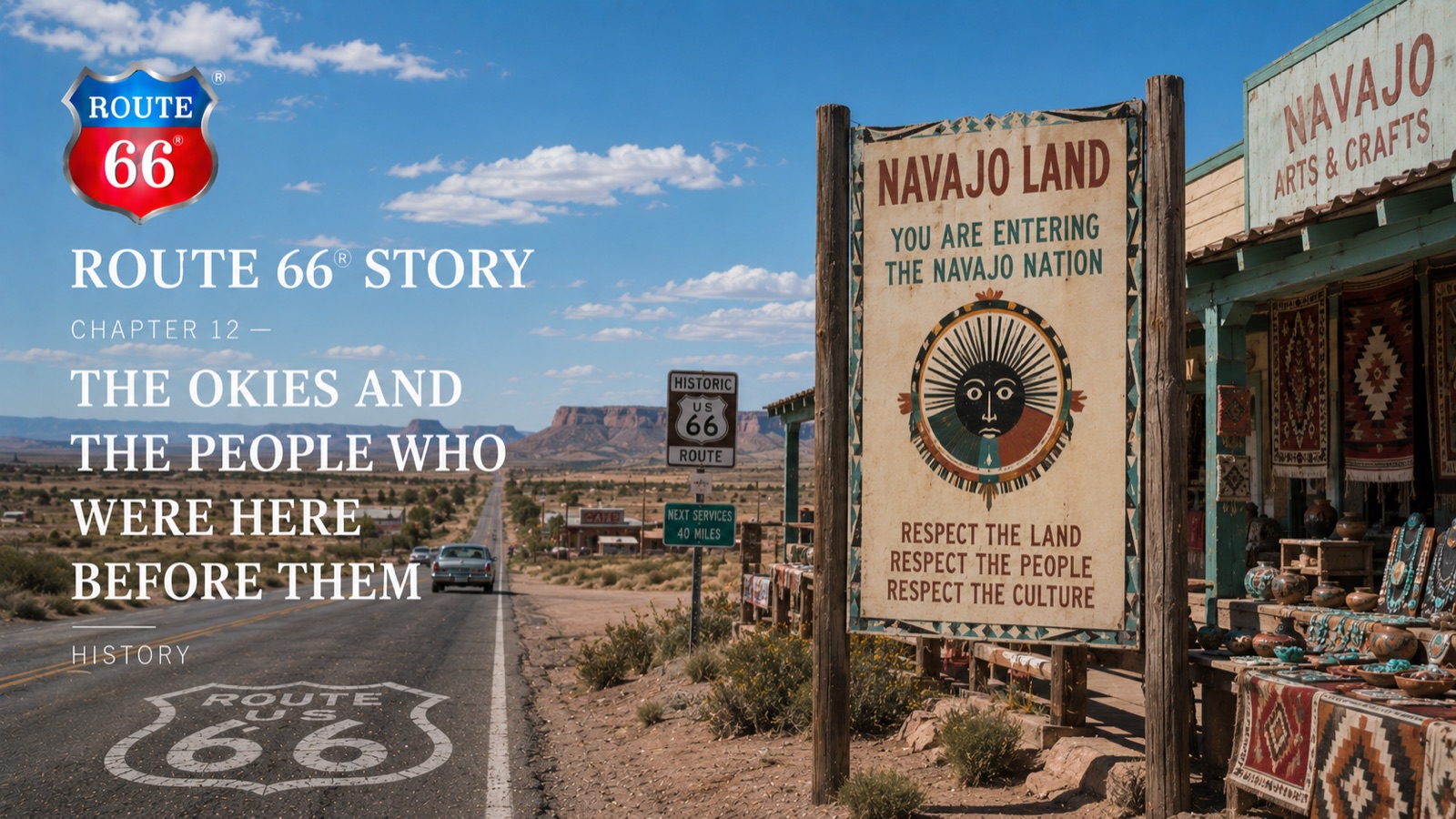
For centuries before Cyrus Avery drew his line on a map, the land Route 66 crosses had been home to Indigenous nations — the Pueblo peoples of New Mexico, the Navajo, the Hopi, the various Apache bands, the Comanche. Many of the towns that Route 66 travelers would stop in for gas and food had been established on land taken from those nations within living memory of the highway’s construction.
In New Mexico especially, the road runs past or through communities that are thousands of years old. The pueblos of Acoma and Laguna sit visible from the highway. The Navajo Nation extends over much of the land that Route 66 crosses in Arizona. The trading posts that Route 66 travelers patronized in the 1940s and 1950s — buying turquoise jewelry and Navajo rugs as souvenirs — were part of an economic system that consistently undervalued Native labor and craftsmanship.
This doesn’t make the Route 66 story smaller. It makes it more complicated and more honest. The road runs through a history that predates it by centuries. The travelers who drove it were moving through someone else’s homeland, which had been turned into scenery.
Knowing that doesn’t diminish the road. It deepens it. Routes don’t exist in empty space. They run through everything that came before.
We are offering licences for ROUTE 66® Beer in specific territories. An invitation to others to become part of this story. To carry a piece of the road with them and to contribute to the story. We will share a percentage of royalties with Route 66 associations to keep the story alive.
The journey continues. This story is brought to you by ROUTE 66® BEER. Find us at ROUTE66BEER.COM

BY ENTERING THIS WEBSITE YOU MUST BE AND CONFIRM THAT YOU ARE OF LEGAL DRINKING AGE IN THE COUNTRY THAT YOU ARE IN AND LEGALLY PERMITTED TO VIEW THESE PAGES.
This info is all part of our commitment to responsible drinking.