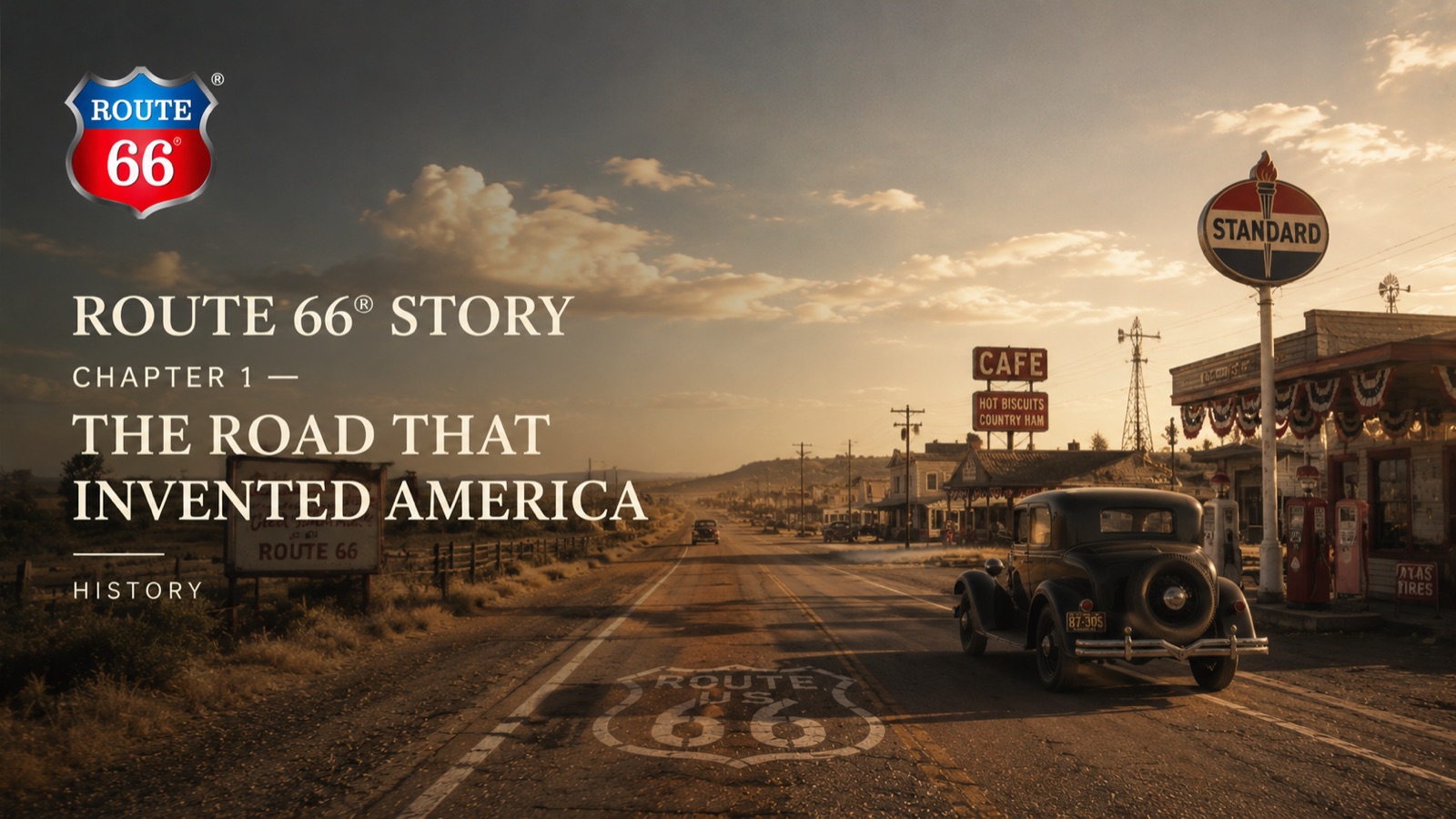
There’s a myth that Route 66 was built because Americans loved adventure. The truth is a little more desperate than that. When the highway was commissioned in 1926, roughly 85 percent of American roads were dirt tracks that turned to mud every time it rained. The federal government needed a spine — one continuous road linking Chicago to Los Angeles — to pull the country out of its patchwork of disconnected routes and into something resembling a modern nation.
Cyrus Avery, an Oklahoma oilman and road booster who’d been lobbying for a national highway system for years, was the man who drew the route on the map. He wanted the highway to run through Oklahoma, his home state, and he got it. The number 66 was chosen almost at random — someone in a committee meeting noticed it had a nice sound to it. Nobody argued.
The first travelers on the newly christened Route 66 were not tourists. They were truck drivers hauling produce from California farms to eastern cities, salesmen with car trunks full of samples, and ordinary families moving across the country in search of work. The gas stations, diners, and motels that came to define the road’s character grew up to serve those people — practical, no-frills, built to get you back on the road fast.
By the 1950s, the road had transformed into something its builders never quite imagined: a symbol of freedom, possibility, and the idea that you could always drive far enough to start over. That mythology didn’t come from a planning meeting. It grew up slowly, mile by mile, from the people who actually drove it.
Some roads take you places. Route 66 made you believe the journey was the point.
We are offering licences for ROUTE 66® Beer in specific territories. An invitation to others to become part of this story. To carry a piece of the road with them and to contribute to the story. We will share a percentage of royalties with Route 66 associations to keep the story alive.
The journey continues. This story is brought to you by ROUTE 66® BEER. Find us at ROUTE66BEER.COM

BY ENTERING THIS WEBSITE YOU MUST BE AND CONFIRM THAT YOU ARE OF LEGAL DRINKING AGE IN THE COUNTRY THAT YOU ARE IN AND LEGALLY PERMITTED TO VIEW THESE PAGES.
This info is all part of our commitment to responsible drinking.